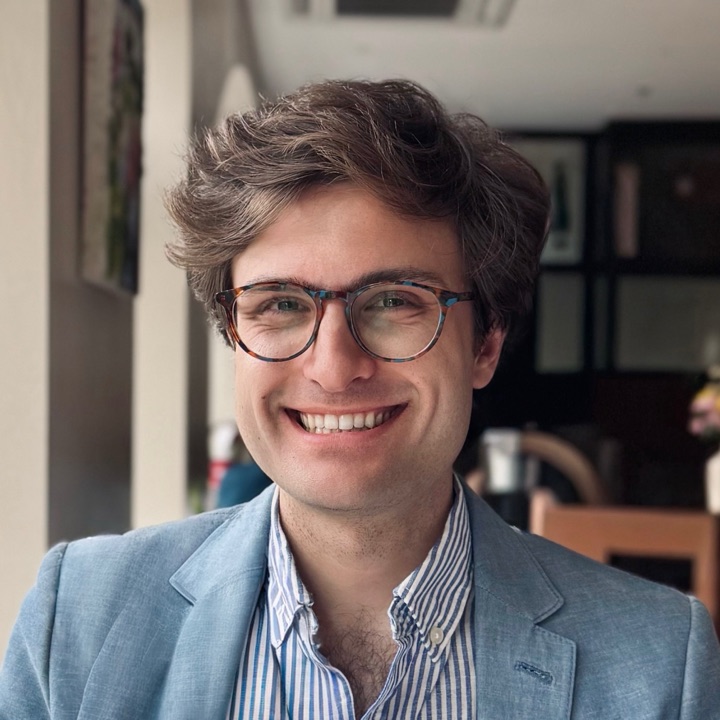
Portrait of Charles Rabolli

Charles P. Rabolli

md/phd candidate · rna biologist · computational pathology

I’m a physician-scientist in training at The Ohio State University, finishing my MD in the NIH-funded Medical Scientist Training Program. My PhD in Biomedical Engineering asked how a single chemical mark on messenger RNA, m6A, shapes the way the heart responds to stress and how the heart uses it to signal to the rest of the body. That work was supported by an NIH F30 fellowship and led to first-author papers in Circulation, JCI Insight, and RNA.

These days I’m focused on pathology and on how machine learning is changing it: I’m training clinically in pathology and have annotated whole-slide images for computational pathology research. I trained in the U.S., in Italy as a Fulbright Scholar, and in Germany. I’m also active in biotech entrepreneurship through Nucleate.

The Ohio State University · Columbus, Ohio

Long-form, illustrated guides to the fields I work in. Written for curious scientists, clinicians, and engineers.

My PhD asked how one chemical mark on messenger RNA, m6A, shapes the way the heart responds to stress, and how the heart uses it to signal to the rest of the body.

18
peer-reviewed publications
3
first-author research papers in Circulation, JCI Insight, and RNA
F30
NIH individual fellowship from NHLBI (F30HL165812)
3
countries of research training: U.S., Italy, Germany
Schematic of a cardiac mRNA: METTL3 writes m6A marks in the coding sequence and 3′ UTR, and YTHDF3 reads them.5′ capCODING SEQUENCE3′ UTRAAAAMETTL3· writeradds m6A to cardiac mRNAYTHDF3· readerbinds the mark1Position matters: CDS vs. 3′ UTR2Heart-to-fat signalingviaFGF13Stress-inducedcardiac growth= m6A

1 Circulation · 2024 first author

Where the mark sits on an mRNA matters

Nanopore direct RNA sequencing mapped METTL3-dependent m6A sites in adult cardiomyocytes. Whether the mark fell in the coding sequence or the 3′ UTR tracked with differences in protein output, and it pointed to targets in mitochondrial metabolism.

read the paper →

2 JCI Insight · 2025 first author

The heart helps set whole-body metabolism

On a Western diet, deleting METTL3 in cardiomyocytes protected mice from the diet's harmful effects, while raising it worsened weight gain, adiposity, and glucose intolerance. Cardiac m6A stabilizes FGF1 mRNA, a heart-to-fat signal.

read the paper →

3 RNA · 2025 first author

An m6A reader drives cardiac growth under stress

Mice lacking YTHDF3 in cardiomyocytes showed less pathological remodeling after pressure overload. YTHDF3 controls stress-induced protein synthesis and cardiomyocyte size, which makes it a candidate cardioprotective target.

read the paper →

all publications →

  • Pathology and AI. Clinical training in pathology, including hematopathology at Ohio State and a visiting clerkship at Brigham and Women's and Mass General. I've also annotated whole-slide images for computational pathology research at Ohio State.
  • Translation. Building the biotech founder community with Nucleate: executive board of Nucleate Michigan, co-founding organizer of a new Ohio State chapter, and host of the 2026 Activator Demo Day in Columbus.
  • Writing. Long-form guides to RNA biology, RNA therapeutics, and computational pathology, updated as the fields move.
  1. Visiting clerkship in pathology at Brigham and Women's Hospital and Massachusetts General Hospital, Boston.
  2. Hosted Nucleate Michigan's Activator Demo Day at Ohio State and moderated a panel on commercializing academic science.
  3. Selected for the USCAP Medical Student Genomics Workshop in San Antonio.
  4. Began annotating whole-slide images for computational pathology research at OSU's AI Lab for Pathology Research (AI4Path).
  5. Joined the executive board of Nucleate Michigan; started organizing a new Nucleate chapter at Ohio State.
  6. AIMP3 paper published in Nature Cardiovascular Research, with coverage from Brown University News.
  7. Completed my PhD in Biomedical Engineering. First-author papers in JCI Insight and RNA; the RNA paper received an invited commentary.
  8. Our team's proposal became one of three commissioned papers in the National Academies report on sequencing RNA and its modifications.