A field guide · RNA therapeutics & biotech
RNA Therapeutics: The Business of Programmable Medicine
How antisense, siRNA, and mRNA medicines went from punchline to platform, how the companies behind them were built and financed, and the questions I’d ask of an RNA startup today.

Contents
Introduction
On my RNA biology page I tell the scientific story: how a molecule once dismissed as a disposable copy turned out to catalyze, regulate, and carry chemical marks. This page tells the other half. It covers how that science became an industry, why it took so long, who paid for it, and what the business of RNA medicines looks like now that it works.
The economic idea at the heart of the field is simple to state. A conventional drug is a new molecule for every target. An RNA drug is mostly information: once you can make an oligonucleotide stable, safe, and able to reach a particular tissue, the next drug for that tissue is largely a matter of changing the sequence. That is what people mean by a platform. It is why companies that spent decades losing money are now among the most valuable in biotech, and why large pharmaceutical companies pay billions for delivery technologies rather than for individual drugs.
It took a long time to get here. Both antisense and RNA interference needed about twenty years from discovery to their first approved medicine, and both went through periods when most of the industry gave up on them. The companies that survived those winters did so with patient capital, unglamorous chemistry, and business models built to outlast skepticism.
I come at this as a physician-scientist rather than an investor. My PhD was on RNA biology in the heart, and many of the largest opportunities for RNA medicines are cardiometabolic. Over the past year I’ve also been involved in the student biotech-entrepreneurship community through Nucleate, and I completed Harvard Business School Online’s CORe program in business fundamentals. This page is my attempt to connect the science to the strategy. Along the way, Deal sheet boxes unpack a transaction, If you’re building boxes are notes for founders, and At the bedside boxes are reminders that the end customer is a patient.
This page is educational. It is not investment advice, and it doesn’t recommend any company or security. Financial figures are list prices or company-reported numbers available as of 2026.
Start here: a viewing path
- Founder Stories: John Maraganore (Axial). Alnylam’s founding CEO on building an RNAi company through the hard years.
- Bringing a New Modality to Scale (Ginkgo Bioworks). Maraganore on what it takes to turn a modality into an industry.
- Nusinersen: the first FDA-approved treatment for SMA (Adrian Krainer, Gairdner Symposium). From a splicing mechanism to a drug.
- Scientist Stories: Phil Sharp (Axial). A Nobel laureate who co-founded both Biogen and Alnylam.
- George Church on building biotech companies (Nucleate Virtual Summit 2025). A serial academic founder on company creation.
- Meet the Founders: Nucleate Activator (Nucleate). What it looks like to start a company from a lab.
Part I: The Toolkit
“RNA therapeutics” covers several distinct technologies that share chemistry, manufacturing, and often delivery, but do very different things to a cell. The business differences follow from the biological ones.
| Modality | What it does | How long one dose lasts | Typical delivery | First U.S. approval |
|---|---|---|---|---|
| Antisense oligo (RNase H) | Binds a target RNA and triggers its destruction | Weeks to months | Subcutaneous (often GalNAc), intrathecal | 1998 (fomivirsen) |
| Splice-switching oligo | Blocks a splice signal to change which exons are kept | Months | Intrathecal, intravenous | 2016 (nusinersen, eteplirsen) |
| siRNA | Loads into RISC, which cuts the target mRNA repeatedly | Three to six months | Subcutaneous GalNAc, IV lipid nanoparticle | 2018 (patisiran) |
| mRNA | Instructs cells to make a protein, often an antigen | Days | Intramuscular or IV lipid nanoparticle | 2020 (COVID-19 vaccines, emergency use) |
| Self-amplifying RNA | An mRNA that copies itself inside the cell | Longer than mRNA, at lower doses | Intramuscular lipid nanoparticle | Japan, 2023 (not yet U.S.) |
| RNA-guided editing | Cas9 or a base editor, guided by RNA, changes DNA | Potentially permanent | Cells edited outside the body; LNP-mRNA in vivo | 2023 (exa-cel, edited outside the body) |
| RNA-editing oligo | Recruits the cell’s ADAR enzyme to change a single base | Under study | Subcutaneous GalNAc | Clinical stage; first human data 2024 |
| Aptamer | A folded RNA that binds a protein like an antibody | Weeks | Intravitreal | 2004 (pegaptanib) |
Two business observations fall out of this table. First, most approved RNA drugs turn something down. That biases the field toward targets where less of a protein is better: a toxic misfolded protein like transthyretin, or a cholesterol regulator like PCSK9. Second, the modalities differ enormously in durability, from days for mRNA to months for siRNA to potentially permanent for editing. Durability shapes everything downstream: dosing, price, how often a patient sees a clinician, and who gets paid for administering the drug.
Part II: Chemistry Was the Moat (1978–2018)
From an idea to a drug-like molecule
In 1978, Paul Zamecnik and Mary Stephenson showed that a short synthetic oligonucleotide complementary to Rous sarcoma virus RNA could inhibit the virus in cells (Zamecnik & Stephenson, 1978). The idea was elegant. The molecule was not a drug. Unmodified nucleic acids are chewed up by nucleases within minutes, bounce off cell membranes, and can trigger the immune system.
The next two decades were chemistry. Replacing a non-bridging oxygen in the backbone with sulfur (the phosphorothioate linkage) slowed degradation and helped oligos bind blood proteins, so they stayed in circulation long enough to reach tissues. Modifications at the 2′ position of the sugar (2′-O-methoxyethyl, 2′-O-methyl, 2′-fluoro) and “locked” or constrained-ethyl sugars increased binding strength and stability and reduced immune activation. For siRNAs, the field eventually learned to modify nearly every nucleotide.
That chemistry is the first moat in this business. It is patentable, it took decades of iteration, and it is hard to reproduce quickly. When people say a company “owns a platform,” they usually mean it owns a specific combination of chemistry, the know-how to make it at scale, and data on how it behaves in humans.
GalNAc: the delivery solution that made the liver easy
The second moat was delivery. The first siRNA drug, patisiran, was packaged in lipid nanoparticles and infused intravenously every three weeks, with premedication to prevent infusion reactions. It worked, and it was approved in 2018. But the field’s real breakthrough was simpler. Attaching a three-armed sugar, N-acetylgalactosamine (GalNAc), lets a chemically stabilized siRNA bind the asialoglycoprotein receptor (ASGPR), which is found in very large numbers on liver cells and almost nowhere else (Nair et al., 2014). The drug can be injected under the skin and taken up by hepatocytes.
The result was a steady march in dosing convenience. Patisiran (2018) was an infusion every three weeks. Givosiran (2019), the first GalNAc-siRNA, was a monthly shot. Vutrisiran (2022) moved to every three months. Inclisiran (2021), which silences PCSK9 to lower LDL cholesterol, is given twice a year after two initial doses.
Part III: Delivery Is the Business
If chemistry made oligonucleotides into drugs, delivery decides which drugs are possible. Look at the approved list and a pattern jumps out: most act in the liver, the central nervous system, or the eye, the three places the field learned to reach first.
| Tissue | How RNA drugs get there | Status | Examples |
|---|---|---|---|
| Liver | GalNAc conjugates; lipid nanoparticles | Many approved drugs | inclisiran, vutrisiran, olezarsen, plozasiran |
| Brain and spinal cord | Injection into the spinal fluid | Approved | nusinersen, tofersen |
| Eye | Injection into the eye | Approved | fomivirsen (historic), pegaptanib |
| Immune system (vaccines) | Lipid-nanoparticle mRNA, intramuscular | Approved | COVID-19 and RSV vaccines |
| Blood stem cells | Edited outside the body, then returned | Approved | exa-cel |
| Skeletal muscle | Unconjugated oligos (modest uptake); antibody–oligonucleotide conjugates | Approved (exon skipping); conjugates in late-stage trials | eteplirsen; antibody-conjugate programs |
| Tumors | Personalized mRNA cancer vaccines | Late-stage trials | neoantigen vaccines |
| Lung | Inhaled siRNA | Early trials | — |
| Heart, kidney, fat | Conjugates, new nanoparticles | Mostly preclinical or early | — |
There’s a lesson for the heart in the first row. One of the largest RNAi markets is a heart disease, transthyretin amyloid cardiomyopathy, treated by silencing a gene in the liver. The misfolded protein that deposits in the heart is made by hepatocytes. In March 2025 the FDA expanded vutrisiran’s label to cardiomyopathy, based on the HELIOS-B outcomes trial. Inclisiran lowers cardiovascular risk factors the same way. Much of “cardiovascular RNA medicine” today is really hepatic RNA medicine.
Reaching the heart muscle itself is a different problem, and for someone who spent a PhD on RNA regulation in cardiomyocytes, it’s the delivery frontier I watch most closely. Antibody–oligonucleotide conjugates, which use an antibody against a receptor on muscle cells to carry an oligo inside, are the most advanced approach for muscle. In October 2025 Novartis agreed to acquire Avidity Biosciences, the leading company built on that idea, for about $12 billion. The deal closed in February 2026, and Avidity’s early-stage cardiology programs were set to be spun out into a separate company. A price like that is a statement about what a solved delivery problem is worth.
Part IV: Three Ways to Build an RNA Company
The field’s three most influential companies were built in strikingly different ways. Each model still has descendants.
Ionis: the long game, financed by partners
Ionis was founded in 1989, as Isis Pharmaceuticals, by Stanley Crooke. For most of its history it was the definition of a long-horizon science company: decades of medicinal chemistry on antisense oligonucleotides, financed largely by partnering programs with larger companies in exchange for upfront payments, milestones, and royalties. Its first approved drug, fomivirsen in 1998, was a scientific milestone and a commercial footnote.
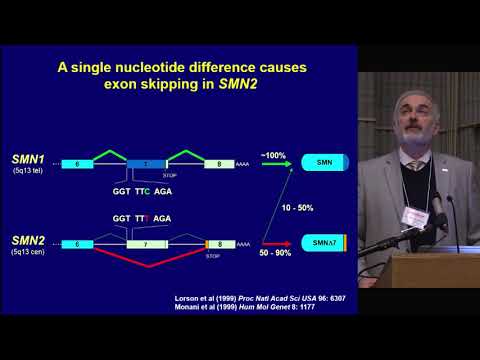
The turning point was spinal muscular atrophy. The backup gene SMN2 mostly skips exon 7, partly because of a splicing silencer in the neighboring intron, first described by Ravindra Singh’s group. Block that silencer with an antisense oligo and the cell makes more full-length SMN protein. Adrian Krainer’s lab at Cold Spring Harbor Laboratory and Ionis scientists led by Frank Bennett screened and optimized the oligo that became nusinersen. Biogen licensed the resulting drug, nusinersen, which was approved in December 2016 for a disease that had been the leading genetic cause of infant death. It was launched at $125,000 per injection: $750,000 in the first year and $375,000 a year after that. That made it one of the most expensive drugs in the world and set off a public argument about rare-disease pricing.
The partnering model has a clear logic. The originator keeps its chemistry engine running without building a sales force, and the partner brings clinical-development scale and commercial reach. The cost is that most of the economics of a breakthrough flow to the partner. AstraZeneca paid Ionis $200 million upfront in 2021 for rights to eplontersen, a transthyretin drug. More recently Ionis has begun launching drugs itself, starting with olezarsen in 2024, a sign that the company now believes it can capture more of the value it creates.
Alnylam: surviving the RNAi winter
Alnylam was founded in 2002, four years after RNA interference was described, by five scientists: Phillip Sharp, Paul Schimmel, David Bartel, Thomas Tuschl, and Phillip Zamore. John Maraganore was the founding CEO. The early 2000s were euphoric about RNAi. In 2006 Merck acquired another RNAi company, Sirna Therapeutics, for about $1.1 billion, and RNAi’s discoverers won the Nobel Prize the same year.
Then delivery turned out to be much harder than expected, and big pharma lost patience. Several large companies closed or scaled back their RNAi efforts around 2010. In 2014, Merck sold Sirna to Alnylam for about $175 million upfront in cash and stock, a fraction of what it had paid. Alnylam kept investing in the problem everyone else had walked away from: delivery chemistry, first with lipid nanoparticles and then with GalNAc conjugates.
The payoff came in stages: the first siRNA approval in 2018, a series of GalNAc drugs in rare liver-driven diseases, the 2025 cardiomyopathy approval for vutrisiran, and partnerships that extend its reach into common disease. Inclisiran was licensed to The Medicines Company, which Novartis acquired for about $9.7 billion in 2020, largely for that drug. In 2023 Roche paid $310 million upfront to partner on zilebesiran, an siRNA against angiotensinogen being developed for hypertension.


Moderna and BioNTech: platform companies meet a pandemic
Moderna was created in 2010 by the venture firm Flagship Pioneering with academic co-founders. It was built on the bet that mRNA could become a general-purpose drug platform for vaccines, protein replacement, and more. It raised unusually large private rounds for years without an approved product. Its December 2018 IPO raised $604 million, the largest biotech IPO on record at the time, and the stock fell 19% on its first day of trading as investors balked at the valuation. BioNTech, founded in Germany in 2008 by Uğur Şahin and Özlem Türeci, focused on mRNA cancer immunotherapy and went public in 2019.
Then the platform thesis was tested at a scale no one had planned for. Both companies’ modified-nucleoside mRNA vaccines (BioNTech’s with Pfizer) were authorized in December 2020, less than a year after the virus was sequenced. Moderna went from about $60 million in revenue in 2019 to about $18.5 billion in 2021. As pandemic demand fell, so did revenue, to about $3.2 billion in 2024. In 2025 BioNTech agreed to acquire its mRNA peer CureVac in an all-stock deal worth about $1.25 billion.
The lesson isn’t that platforms fail. Moderna’s speed in 2020 was the platform working exactly as designed. The lesson is that a platform company’s value depends on how many different products it can turn into durable revenue, and that a single enormous product can hide that question for a few years.
Part V: The Economics
Pricing: the same chemistry across three orders of magnitude
What RNA drugs cost has less to do with how they’re made than with how many patients there are and what the alternatives are. Patisiran launched at an average list price of about $450,000 a year, with an expected net price of about $345,000. An independent cost-effectiveness group argued the price would have to fall by roughly 90–95% to meet common thresholds. Inclisiran, made with closely related chemistry, launched at $3,250 per injection, about $6,500 a year, because it competes for a vast population that already has inexpensive generic statins.
Cost of goods and manufacturing
Oligonucleotides are made by solid-phase chemical synthesis, and mRNA by in vitro transcription, a cell-free enzymatic reaction. Neither needs the living cell lines that antibody manufacturing does, and both are relatively standardized from one product to the next. That is part of the platform argument: much of the manufacturing process carries over to the next sequence. The constraints are real, though. Specialty raw materials, purification at scale, lipid-nanoparticle formulation, and the cold chain for mRNA all matter. Cost of goods becomes decisive when you move from a rare disease priced at hundreds of thousands of dollars to a primary-care drug priced like a statin.
Peak sales, on the back of an envelope
Investors and business-development teams start with a crude model: how many patients, how many are diagnosed, how many will be treated, and at what net price. The calculator below lets you see why ultra-rare and common-disease programs can end up with similar revenue estimates and completely different strategies.
Part VI: Deals and Capital
Most RNA companies never sell a drug themselves. Their value is realized through licensing deals or acquisition, and the pattern of who pays for what is informative.
Three patterns stand out:
- Buying delivery. Novo Nordisk paid $3.3 billion for Dicerna’s RNAi platform in 2021. Novartis paid about $12 billion for Avidity’s antibody–oligonucleotide conjugates in 2025–26. In both cases the buyer was paying for the ability to reach tissues and generate drugs, not for a single asset.
- Buying validated cardiometabolic biology. Novartis’s $9.7 billion acquisition of The Medicines Company was essentially a purchase of inclisiran. Lilly’s 2025 acquisition of Verve, for up to about $1.3 billion, was a bet that a one-time, mRNA-delivered base edit of PCSK9 could someday replace lifelong cholesterol lowering. Roche’s upfront payment for zilebesiran was a bet on hypertension.
- Cycles. The Sirna round trip, the post-pandemic contraction of mRNA, and consolidation such as BioNTech–CureVac are reminders that the industry swings between over-enthusiasm and over-correction. The best-capitalized companies tend to buy during the corrections.
Part VII: What Can Go Wrong
Safety
Oligonucleotides have class-level safety issues that depend on chemistry and dose. One early antisense drug for transthyretin amyloidosis carries a boxed warning for thrombocytopenia and glomerulonephritis. Lipid-nanoparticle drugs can cause infusion reactions. In vivo gene editing raises its own questions. In October 2025, after a serious liver event, Intellia paused its phase 3 trials of an LNP-delivered CRISPR therapy for transthyretin amyloidosis, and the FDA placed them on hold. A trial participant later died; the company reported that the death was due to an infection rather than the liver event. The holds were lifted in early 2026 with added liver monitoring. Episodes like this reprice an entire subfield overnight, which is one reason RNA investors watch competitors’ safety data almost as closely as their own.
Efficacy and regulation
Accelerated approval on a surrogate endpoint is a double-edged sword. In 2016 the FDA granted accelerated approval to eteplirsen, an exon-skipping oligo for Duchenne muscular dystrophy, on the basis of small increases in dystrophin protein, after an advisory committee had voted against it and with agency leadership overruling the review team. Patients and advocates celebrated. Others worried that the precedent lowered the evidence bar. For companies, surrogate-based approval accelerates revenue but leaves confirmatory trials, and the risk of losing the indication, ahead.
Intellectual property
The core enabling technologies of RNA medicine, chemical modifications, lipid nanoparticles, and modified nucleosides, are heavily patented, and some of them have been the subject of high-profile litigation among the largest mRNA companies and the inventors of lipid-nanoparticle technology. For a startup, freedom to operate is not a formality. It shapes which chemistry and delivery systems you can use, and whom you can partner with.
One patient at a time
The most moving and least solved part of the field is individualized medicine. In 2019, a team at Boston Children’s Hospital designed a splice-correcting antisense oligo, named milasen, for a single child with a fatal neurodegenerative disease. They took it from the genetic diagnosis to treatment in about a year (Kim et al., 2019). In 2025, a personalized in vivo base editor was given to an infant with a urea-cycle disorder (described in Part VI of my RNA page). The science works. The business model doesn’t yet: no conventional company can recoup development costs from one patient. Nonprofits such as the n-Lorem Foundation, started by Ionis’s founder, and new regulatory frameworks are trying to fill the gap.
Part VIII: How I’d Evaluate an RNA Startup
When I look at an RNA company, as a student organizer hearing pitches or as a scientist reading a paper with a company behind it, these are the questions I’ve learned to ask.
| Question | Why it matters | Encouraging | Worrying |
|---|---|---|---|
| Is the target genetically validated in humans? | Natural knockouts predict efficacy and safety | Human loss-of-function data, as with PCSK9 | Rationale based only on mouse models |
| Can the drug reach the tissue? | Delivery determines feasibility | Target engagement in the right cell type in primates | “Platform” claims without tissue data |
| Does the modality fit the biology? | Knockdown, restoration, and editing solve different problems | Clear match (e.g., silence a toxic protein) | A modality in search of a target |
| How durable is it? | Dosing interval drives adoption and competition | Months between doses, or one-time | Frequent dosing in a crowded market |
| Is there an early biomarker? | Fast, cheap proof of concept | LDL, TTR, triglycerides, protein levels | Proof requires a multi-year outcomes trial |
| Is there freedom to operate? | Chemistry and delivery IP | Owned or licensed, with clear rights | Unlicensed use of contested technology |
| Who pays, and how? | Rare and common diseases are different businesses | A credible payer and channel strategy | A rare-disease price assumed for a common disease |
| Who’s on the team? | Oligo drug development is specialized | Chemistry, delivery, clinical, and business development experience | Only the founding scientist’s expertise |
Drugs that target the epitranscriptome itself are a related frontier. These are mostly small molecules rather than oligonucleotides, aimed at RNA-modifying enzymes. The first METTL3 inhibitor entered human trials in cancer in 2022. Whether that biology becomes a broad drug class is one of the open bets in RNA therapeutics.
Building in the Ecosystem
RNA companies are disproportionately founded by academic scientists, and the path from a lab to a company is learnable. Phillip Sharp, who co-discovered RNA splicing, co-founded both Biogen and Alnylam. George Church has co-founded dozens of companies.


For students, Nucleate is one on-ramp. It is a student-led, nonprofit community whose flagship Activator program supports academic founding teams for six months, without taking equity. I serve on the executive board of Nucleate Michigan, have been helping organize a new chapter at Ohio State, and in May 2026 hosted Nucleate Michigan’s Activator Demo Day in Columbus. What I value most about it is that it puts trainees in the same room as founders, investors, and operators early enough to learn which questions to ask.

Physician-scientists bring something specific to this ecosystem. We know which unmet needs are real at the bedside, which biomarkers clinicians trust, and how a drug would actually be prescribed, administered, and paid for. Many RNA programs fail commercially because those details were treated as somebody else’s problem.
Some closing thoughts
The RNA medicine business has followed a recognizable arc: a beautiful idea, a long and expensive struggle with chemistry and delivery, a period when most of the industry gave up, and then a payoff large enough to reshape how big pharma invests. The companies that won were not the ones with the best initial idea. They were the ones that kept solving the unglamorous problem everyone else had abandoned.
A few convictions:
- Delivery is destiny. The next decade of RNA medicines will be defined by which tissues beyond the liver, brain, and eye become reachable. The heart is high on my list.
- Durability is a product feature. A twice-yearly or one-time therapy changes adherence, pricing, and the competitive landscape.
- Human genetics de-risks targets. The best RNA programs start with a natural experiment in people.
- The hardest problems are increasingly commercial. Pricing for common diseases, workflows in primary care, and business models for one-patient medicines are now the bottlenecks as much as the science.
Essential resources
Papers and primary sources
- Zamecnik PC, Stephenson ML. Inhibition of Rous sarcoma virus replication and cell transformation by a specific oligodeoxynucleotide. PNAS 1978. PubMed
- Fire A, et al. Potent and specific genetic interference by double-stranded RNA in Caenorhabditis elegans. Nature 1998. PubMed
- Karikó K, et al. Suppression of RNA recognition by Toll-like receptors: the impact of nucleoside modification. Immunity 2005. PubMed
- Nair JK, et al. Multivalent N-acetylgalactosamine-conjugated siRNA localizes in hepatocytes and elicits robust RNAi-mediated gene silencing. J Am Chem Soc 2014. PubMed
- Finkel RS, et al. Nusinersen versus sham control in infantile-onset spinal muscular atrophy. N Engl J Med 2017. PubMed
- Adams D, et al. Patisiran, an RNAi therapeutic, for hereditary transthyretin amyloidosis. N Engl J Med 2018. PubMed
- Kim J, et al. Patient-customized oligonucleotide therapy for a rare genetic disease. N Engl J Med 2019. PubMed
- Ray KK, et al. Two phase 3 trials of inclisiran in patients with elevated LDL cholesterol. N Engl J Med 2020. PubMed
- Gillmore JD, et al. CRISPR-Cas9 in vivo gene editing for transthyretin amyloidosis. N Engl J Med 2021. PubMed
- Musunuru K, et al. Patient-specific in vivo gene editing to treat a rare genetic disease. N Engl J Med 2025. PubMed
Where to learn more
- Books: Katalin Karikó’s memoir Breaking Through (2023); Gregory Zuckerman’s A Shot to Save the World (2021), on the vaccine race; Walter Isaacson’s The Code Breaker (2021), on CRISPR.
- Primary data: the FDA’s Novel Drug Approvals lists, company annual reports on SEC EDGAR, and ClinicalTrials.gov for pipelines.
- Community: the Oligonucleotide Therapeutics Society and, for students and postdocs who want to build, Nucleate.
- Science background: my RNA biology guide covers the mechanisms behind every modality on this page.
Citation
The text and original figures are © Charles P. Rabolli. Videos are embedded from their original publishers. This page is educational. It is not investment, legal, or medical advice, and mentions of companies are not endorsements.